SCIENTIFIC AND METHODOLOGICAL PRODUCTION
18 methodologies and frameworks
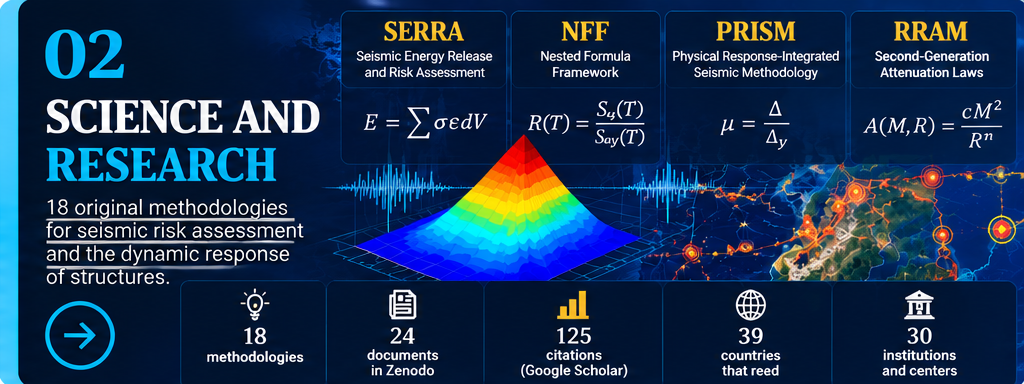
The methodologies are presented as scientific developments linked to their Zenodo publications. When a dedicated methodological platform exists within the THEK ecosystem, direct access is also provided.

Conceptual framework that interprets formulas as structures with a mathematical “genome” subject to evolution, selection, recombination and convergence; it studies the systematic transformation of scientific formulations and uses NFF as an operational instrument.

Mathematical discovery framework that incorporates variables sequentially and recursively models the coefficients at each level, seeking traceability, interpretability and a hierarchical structure in the construction of new formulations.
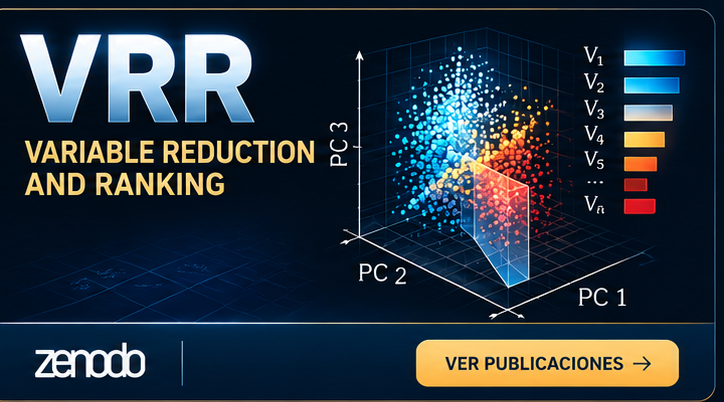
Methodology designed to identify, reduce and rank variables according to their influence before constructing mathematical or computational models, reducing dimensionality and focusing analysis on the variables with the greatest explanatory capacity.
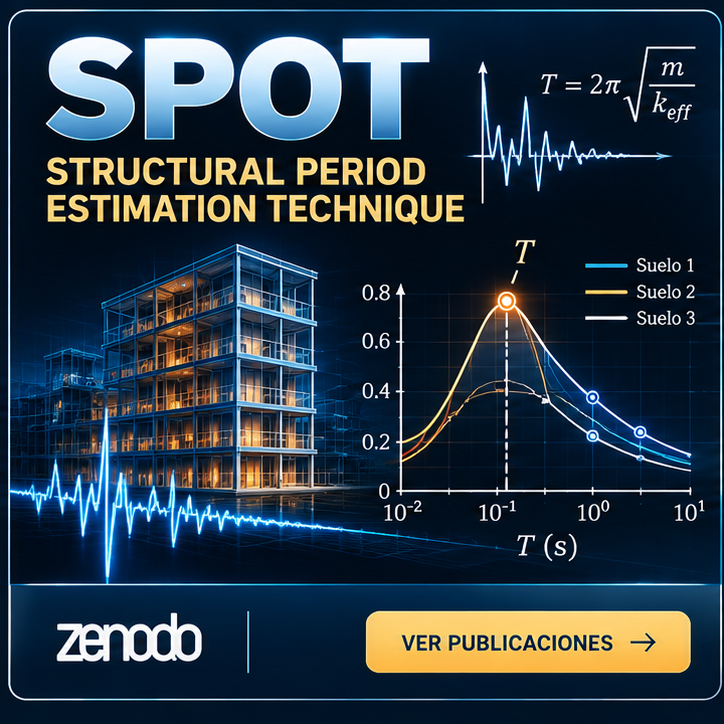
Compact formulation for estimating the natural period of regular reinforced-concrete frames from reduced structural variables and parametric modeling, aimed at a practical estimate of fundamental dynamic behavior.

Model that develops empirical correlations to estimate the soil spring coefficient in clays from geotechnical parameters, with direct application to simplified soil–structure interaction representation.
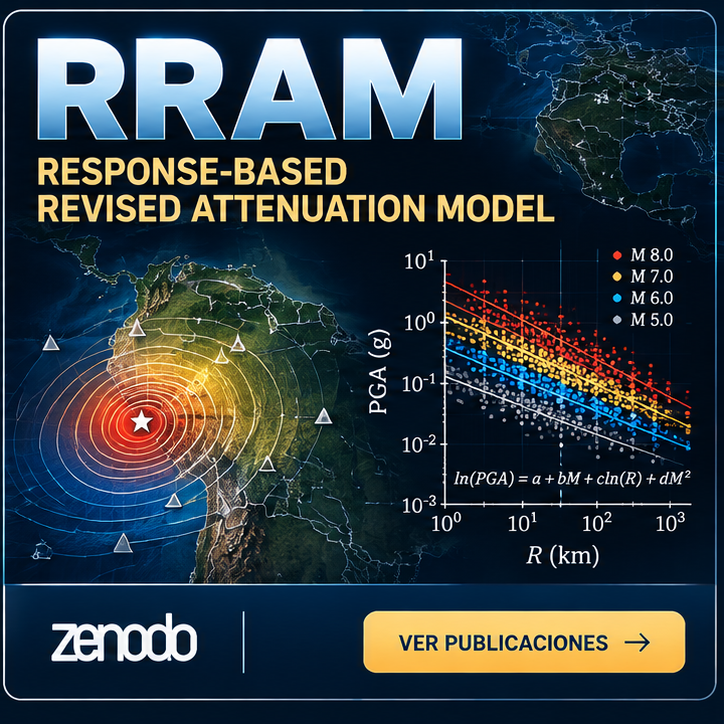
Methodology for constructing attenuation laws from real seismic records; its evolution incorporates nonlinear magnitude terms and their interaction with distance to improve representation of response from the epicentral region toward the tail.
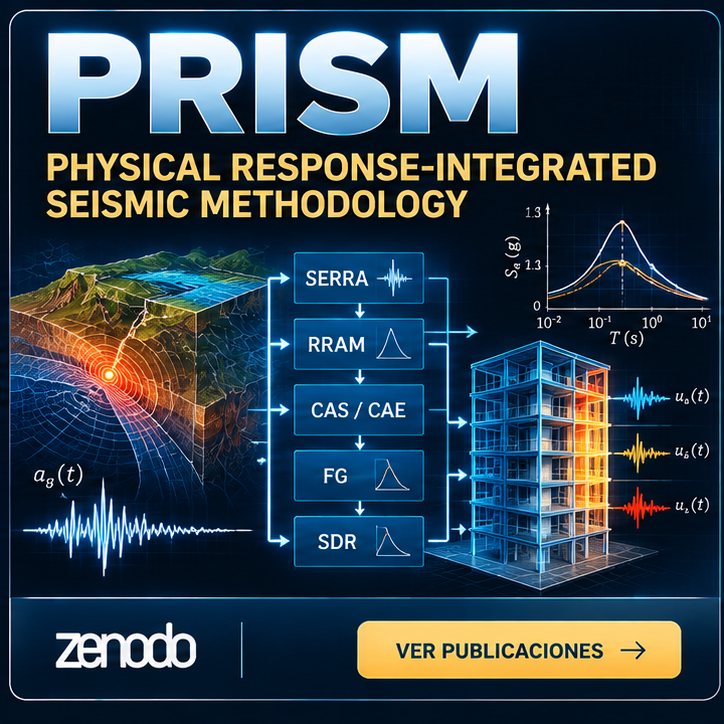
Methodology that physically integrates seismic-hazard components, structural response and design variables within a single analytical chain, connecting motion characterization with response and engineering decisions.
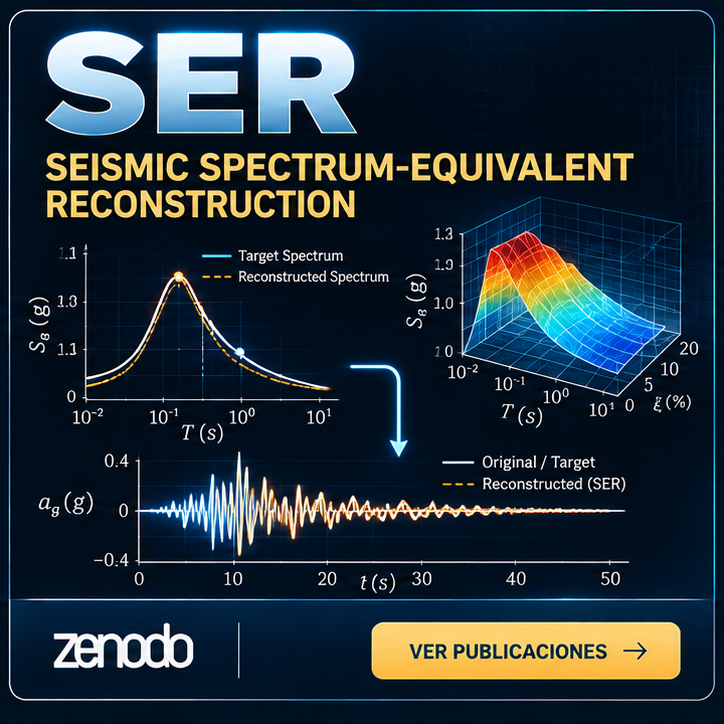
Method for reconstructing seismic time histories from a target spectrum using harmonic components, dynamic weighting, resonance regularization and a normalized time envelope, seeking spectral equivalence with the defined demand.
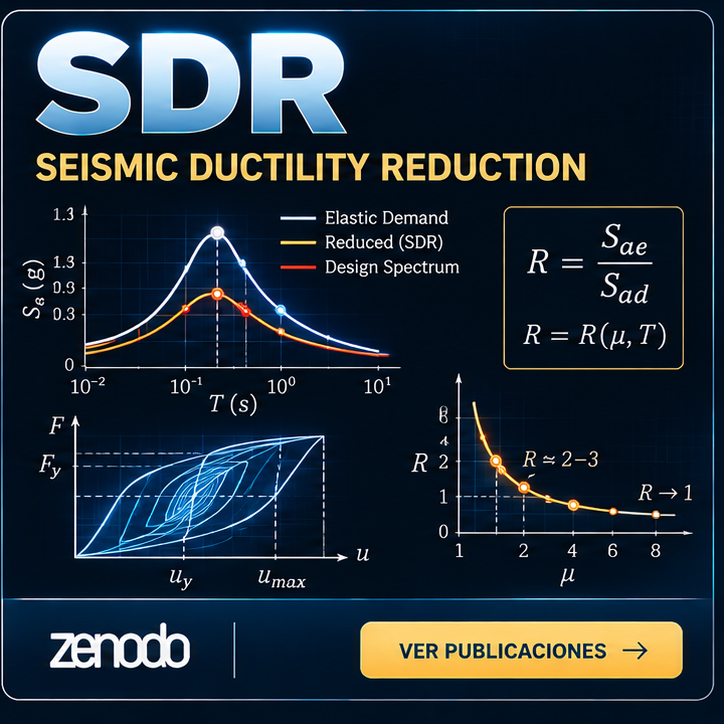
Proposal for representing the seismic reduction factor as a function of ductility and structural period, linking elastic demand to reduced demand for design applications and discussion of code criteria.

Ductility-based inelastic design-spectrum methodology developed to represent how seismic demand changes with period, ductility level and regional or soil conditions, facilitating its use in earthquake-resistant design.
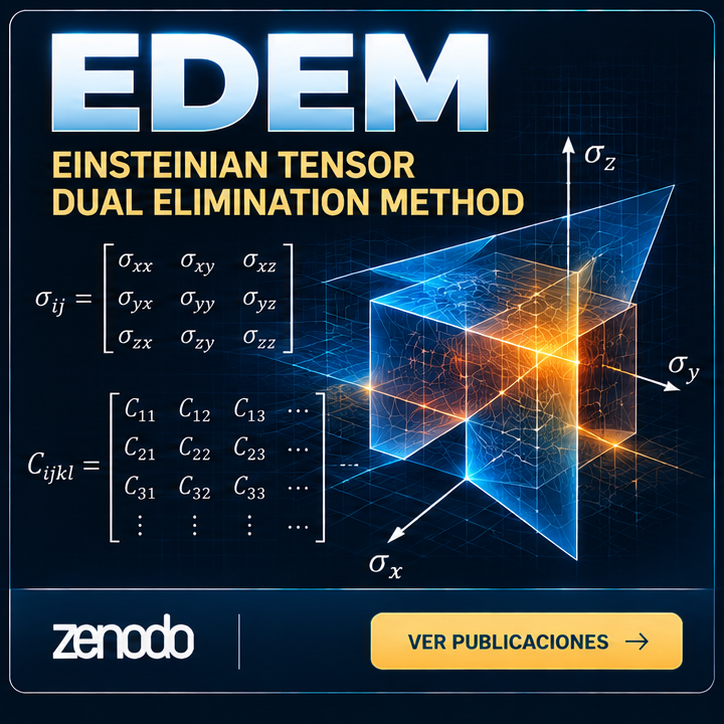
Matrix and tensor elimination method formulated with Einstein-style index notation for solving n×n linear systems, including bidirectional and unidirectional elimination schemes within a compact algebraic representation.

Hierarchical symbolic encoding system using external and internal binary matrices, designed to represent multidimensional and multilingual information in a structured way and enable compact forms of storage and transformation.
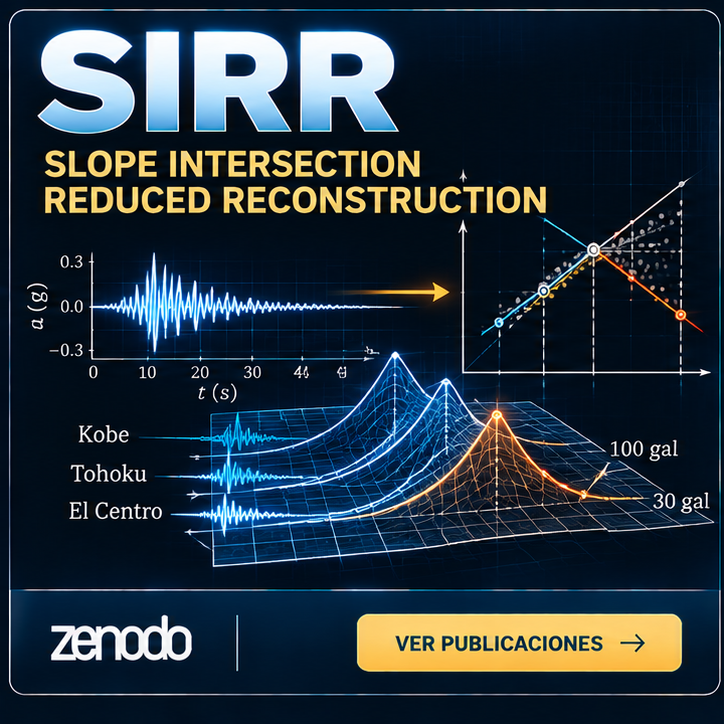
Method for reconstructing clipped seismic peaks through slope intersections and a reduced formulation, building on the 1999–2000 development and its later evolution toward reduced-parameter reconstruction.

Dynamic integration method based on higher-order polynomial approximations for solving the time response of structural systems, proposed as a numerical alternative to improve stability and accuracy compared with traditional integration schemes.
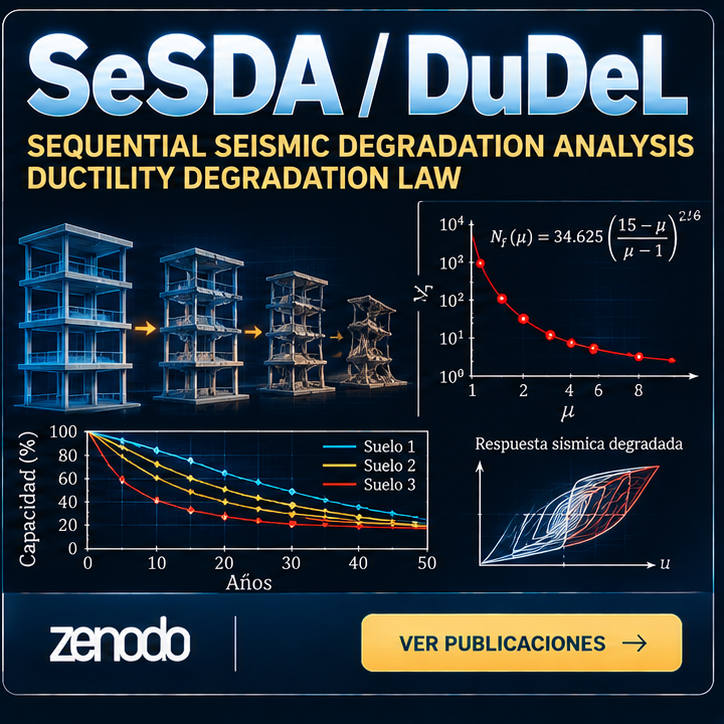
SeSDA sequentially analyzes the degradation of a structure subjected to earthquake sequences and service life; DuDeL provides a ductility degradation law that represents progressive loss of capacity within that assessment.

Hybrid methodology for assessing seismic vulnerability before an earthquake and rapidly quantifying the building stock after the event, integrating field inspection, structural analysis, typologies and aggregated urban-risk indicators.

Methodological family for estimating human and physical consequences of severe earthquakes: SECA-GM uses a global formulation based on magnitude, depth, vulnerability and exposure, while SECA-DM proportionally transfers consequences observed in comparable historical events.
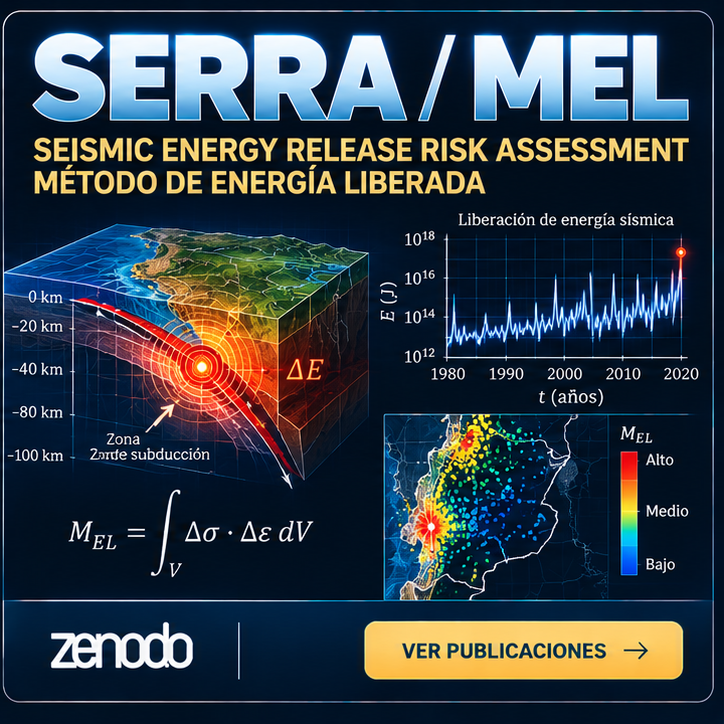
Physical framework based on released seismic energy to characterize regional behavior, identify reactivation stages, and build hazard/risk assessments and maps, with emphasis on risk evaluation and interpretation.